Nobody pays to send a message. They pay to get one back.
- Founding designer, Hotly
- Dec 2025 – Jul 2026
- Fan page, creator dashboard, lifecycle emails, analytics
- Osi Peters (CEO), Bhavneet Singh (engineering), Ray, Kimora
- Next.js, SendGrid, Microsoft Clarity
- $9,642 organic, six months, one creator
Bailey’s DMs were free, and went unanswered. She had 523k followers and still made more money waitressing. So why would anyone pay to message someone they could already message for free? 167 people did, and many of them paid again.
Penpal was Hotly’s bet that creator monetization tools were asking for the wrong thing: more content, more posting, more hours. We sold what Bailey already had, access. A fan pays a few dollars to send a note; she replies once a week. I was the founding designer, and the fan page, her dashboard, the emails between them, and the analytics were all mine. Success meant recurring income for Bailey, from no new content, inside one hour of her week.
167 of 523,000. that ratio is the whole study.
Launch week read like a warning
Revenue moved when Bailey posted and sat still when she didn’t. So I went looking for what people were actually buying. I watched every journey in Clarity, kept the drafts fans wrote but never paid to send, and tagged each conversation by why the fan came.
The answer landed in my January 20 report: after Bailey replied, one-time buyers paid again. First purchases are marketing. Repeat purchases are design. The design’s job was the reply. (One unpaid draft demanded, in all caps, that this be free. It later became the Dome.)
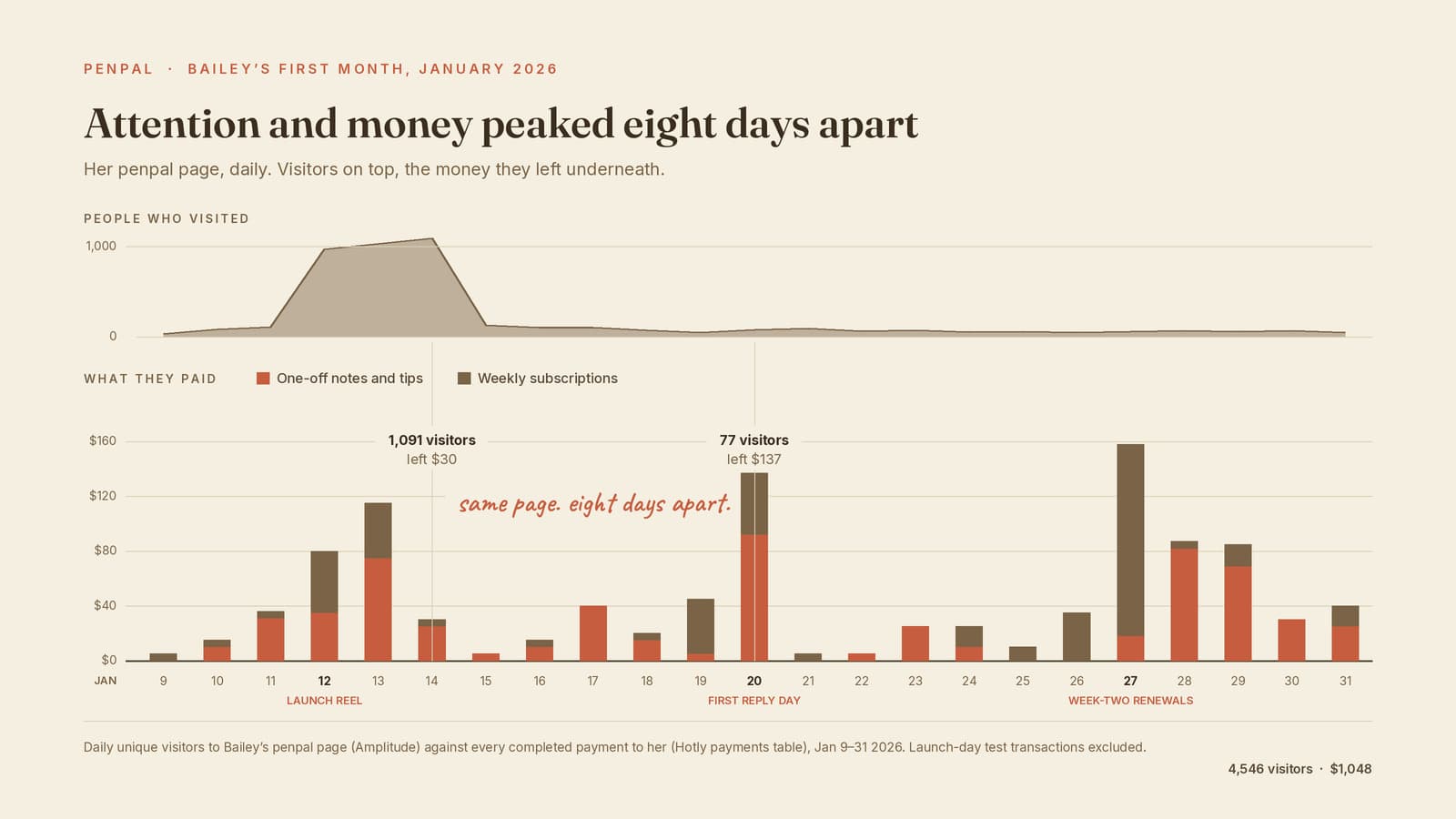
i wrote that line six times. it’s the only one i kept.
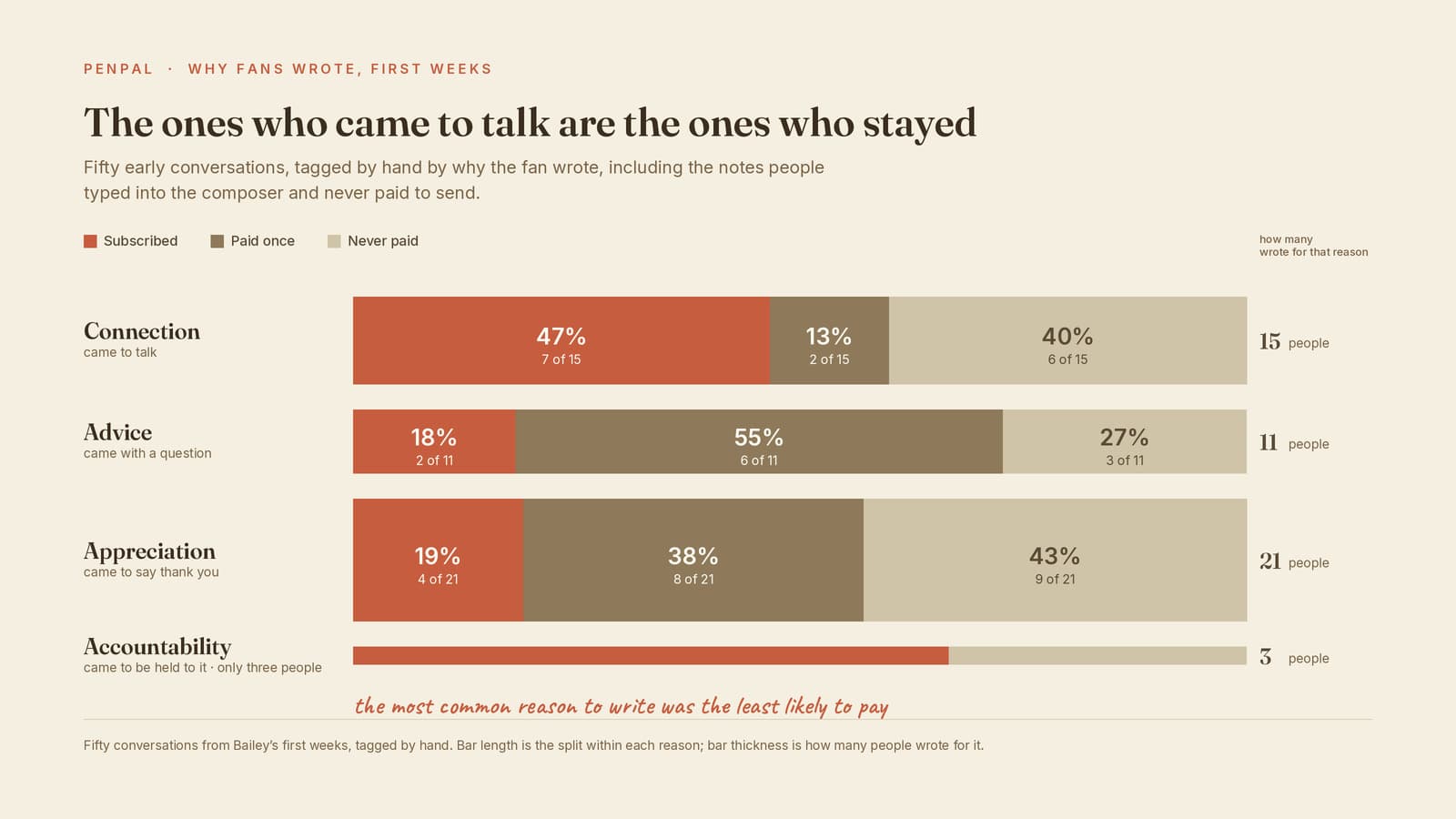
tagged by hand. two hundred-odd conversations, one evening, no tooling.
The fan’s side of the door: staying costs nothing
Fans could write as much as they wanted; they were paying for access. The obligation sat on Bailey: one reply a week. So the only weekly reminder in the system went to her, never to her fans. We refused the retention prompt every subscription product ships. The one nudge we kept asked a quiet fan, after three and a half weeks, whether they wanted to keep the door open. Everything else in the inbox read like a letter from Bailey’s team, and that layer has its own page: the email showcase.
“Why does the user need another message when he can just reply and wait for her?” We killed the weekly prompt. The pace belongs to the two people talking.
every subscription product ships this nudge. we shipped nothing instead.
Bailey’s side of the door: the reply had to fit in one hour a week
We promised Bailey all of this costs one hour a week, so the dashboard’s job is spending that hour well. The design is the queue, not the pixels: beside every message sits what the fan has spent and how long they have stayed, so she knows how much of herself to put into the reply. “All caught up” ends the session. And one tab exists so she never has to be brave: messages that could hurt her were flagged and reviewed by our team before anything reached her.
three weeks on this and it still looks like a list. that was the job.
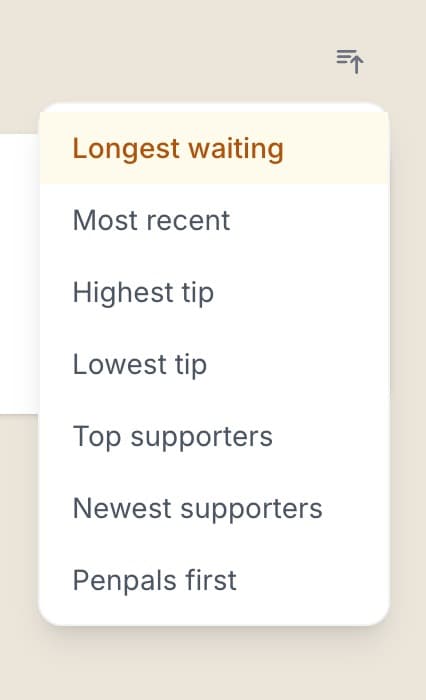
this tab exists because of one message i had to read first.
Six months, one creator, $9,642
By the end of January, Penpal was Bailey’s biggest online income source, five years into her creator career. The receipts are above; the honesty belongs beside them. Sponsorship is excluded from the figure on purpose. One creator drove 87% of it: demand validated with one creator, not product-market fit, and the revenue is a floor, not a trajectory.
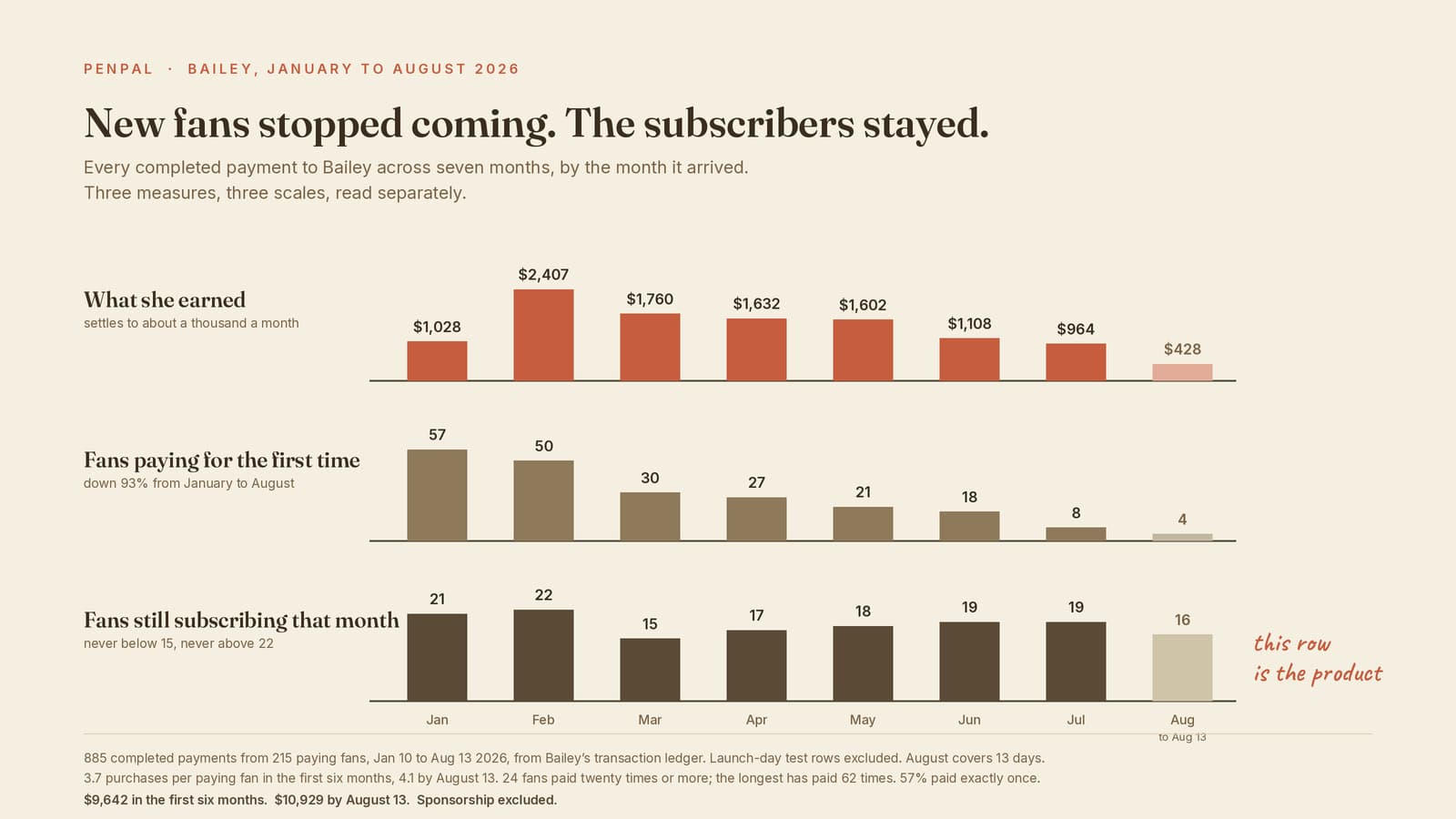
the gross number was bigger. i couldn’t defend it, so it isn’t here.
Learnings
Access did not generalize, and the reason was not design. Of 220 creators who signed up, 13 ever had a paying fan, because not everyone’s audience wants to talk to them. Bailey’s fans came for connection; most audiences come for content.
The free community was a different audience, not a funnel. We tested that before believing it; that story lives in the Dome showcase.
13 out of 220. that number kept me honest for the rest of the year.
What paying for the reply looks like
One $5 penpal wrote back a long reply, then went to the public page and tipped $22 so he would not, in his words, “scam the system.” Nobody designed a guilt-tip feature. That is what paying for the reply looks like.
i still think about this guy.